Series

45 articles

Part 3. TANREN — Patching the Evolved Cache Policy into a Real vLLM and Measuring It Series
TANRENEvolutionary SearchvLLMLLMCachingPythonGB10

Part 3. TANREN — Patching the Evolved Cache Policy into a Real vLLM and Measuring It

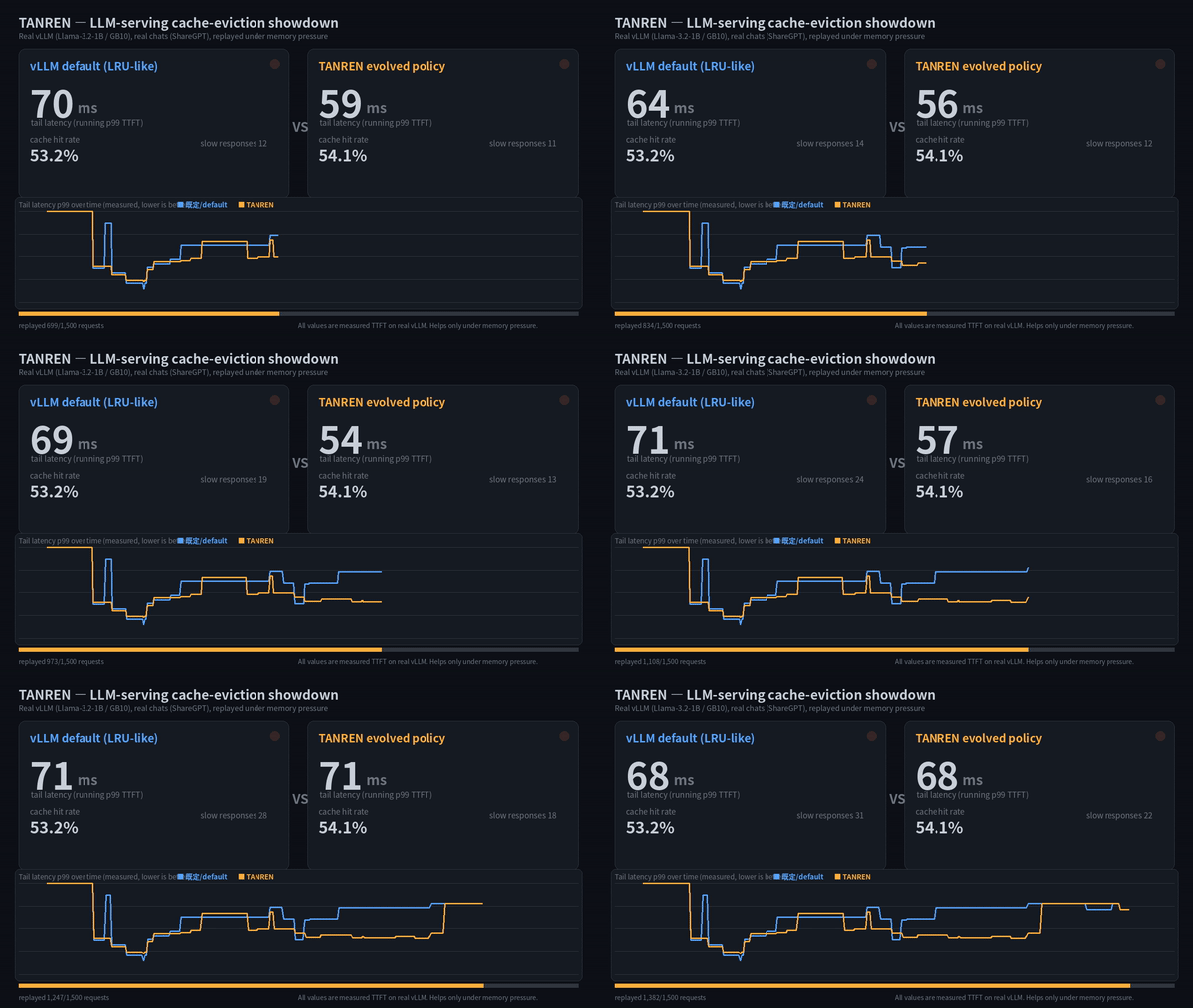
The cache policy that won in simulation is patched into a live vLLM and measured on real hardware. The simulated win vanished at first; after fixing where and what to measure, tail latency (p99 TTFT) came out 13-16% lower under memory pressure. The prototype's costs and the conditions where it does not help are reported as measured.

Read more →
Part 1. TANREN — Atari Pong 21–0, and the Kill-Shot the Loop Found on Its Own Series
TANRENEvolutionary SearchFunSearchAtariReinforcement LearningLLMPython

Part 1. TANREN — Atari Pong 21–0, and the Kill-Shot the Loop Found on Its Own

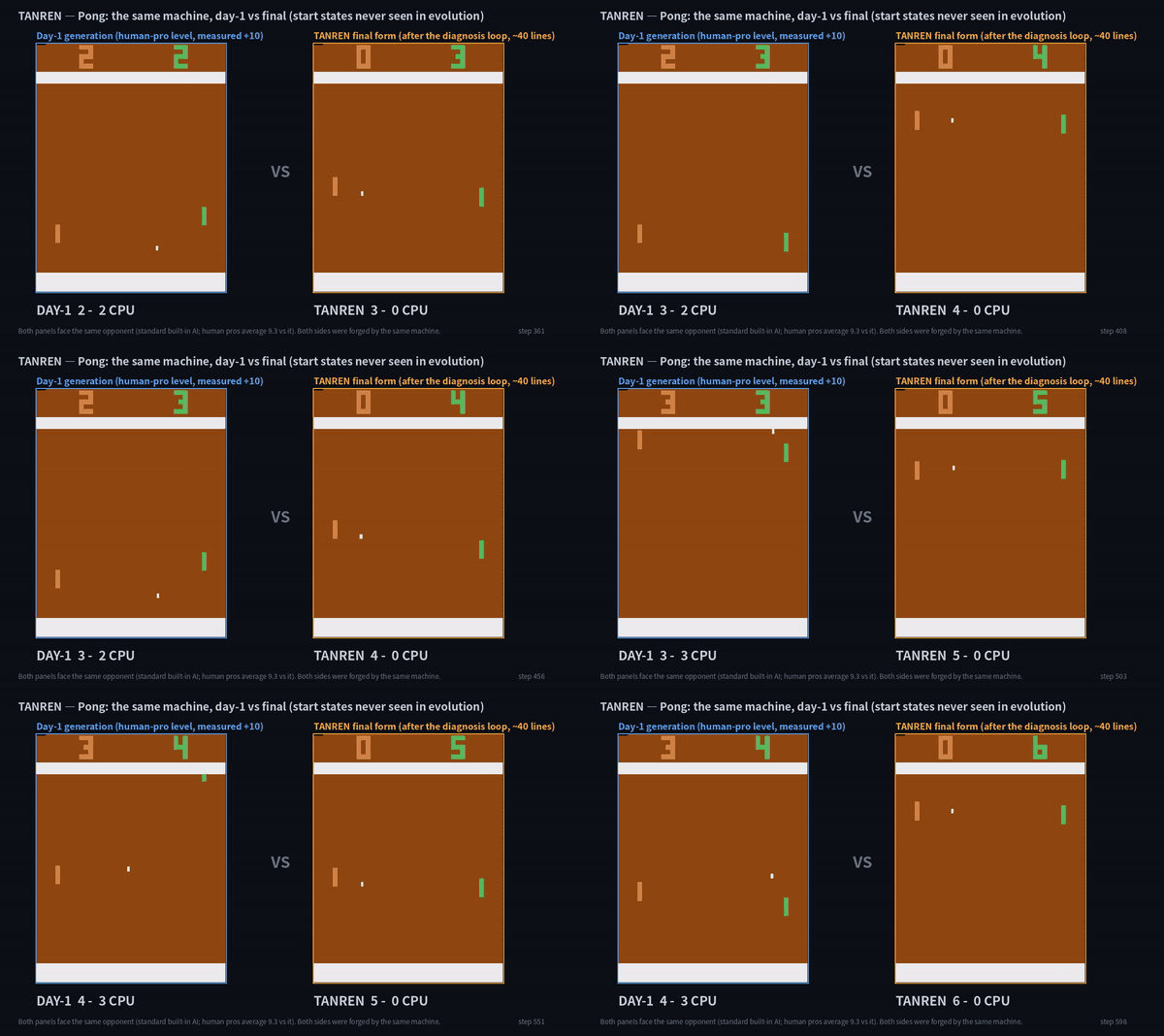
How an evolutionary loop — a cheap LLM writing code, scored by a deterministic verifier — reached the theoretical ceiling on Atari Pong (21–0 across 40 games) from nothing but the 128-byte RAM, and discovered a single winning shot without being taught it. Includes the honest protocol and the diagnostic loop that made it work for a few dollars.

Read more →
Part 2. Measuring KOI on a Text-to-SQL agent — picking a cost-effective model without dropping quality Series
KOIText-to-SQLLLMAI Cost OptimizationOpenRouterNishikiAI Agent

Part 2. Measuring KOI on a Text-to-SQL agent — picking a cost-effective model without dropping quality

Using a Text-to-SQL agent — you ask in plain language, the AI writes SQL and queries an internal database — I measured five models by KOI (KPI ÷ cost). With a quality floor in place, I show how to pick the most cost-effective model, with real numbers and the full procedure.

Read more →
Part 1. VOI and KOI: Metrics for the Token Economy — Maximizing AI's Result per Dollar Series
AITokenmaxxingAI Cost OptimizationModel RoutingKOI

Part 1. VOI and KOI: Metrics for the Token Economy — Maximizing AI's Result per Dollar

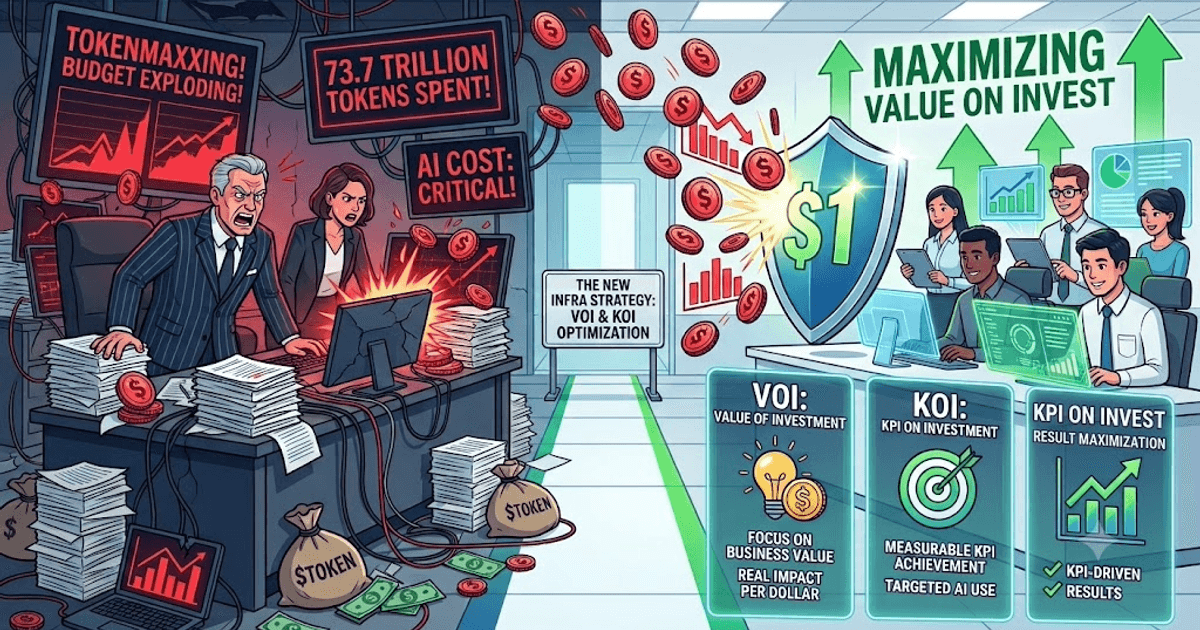
Tokenmaxxing is turning AI usage into an internal score, and infrastructure cost is running away. I look at model routers as the first line of defense, their blind spot, and the shift from input-driven to outcome-driven routing with two metrics — VOI and KOI — and an open-source tool, Nishiki.

Read more →
Part 1. Setting Up OpenClaw on a Cloud Server — Why Costs Hit $10 a Day Series
OpenClawHetznerCost OptimizationOllamaGemma3AI Agent

Part 1. Setting Up OpenClaw on a Cloud Server — Why Costs Hit $10 a Day

On day one of running OpenClaw on a cloud server, API costs came in 5-10x higher than expected. Here is how I broke down the causes and arrived at a 3-tier model strategy.

Read more →
Part 2. OpenClaw Code Generation — Gemini Flash's Failure and Switching to Claude Delegation Series
ClaudeGeminiCode GenerationLLM ComparisonOpenClawAI Agent

Part 2. OpenClaw Code Generation — Gemini Flash's Failure and Switching to Claude Delegation

When I let OpenClaw's default setup (Gemini 3 Flash) write the Python rule-check code, the AI ended up hardcoding the expected answers after 25 rewrites. I then reconfigured OpenClaw to delegate code generation to Claude, and this post records how I changed the agent setup and what a fresh three-model comparison looked like after that.

Read more →
Part 3. OpenClaw Heartbeat Gone Wrong — Lessons From an Agent Runaway at 3 AM Series
OpenClawheartbeatCost ManagementSecurityAI AgentIncident

Part 3. OpenClaw Heartbeat Gone Wrong — Lessons From an Agent Runaway at 3 AM

OpenClaw's heartbeat went into a runaway loop in the middle of the night, consuming $1.29 in 2 hours 36 minutes. Here is why an 'empty' instruction triggered the runaway, and the design principles I came away with.

Read more →
Part 1: From GANs to Generative AI — Why and How the Migration Happened Series
AIGenerative AIGeminiVirtual Try-OnComputer VisionGoogle Cloud

Part 1: From GANs to Generative AI — Why and How the Migration Happened

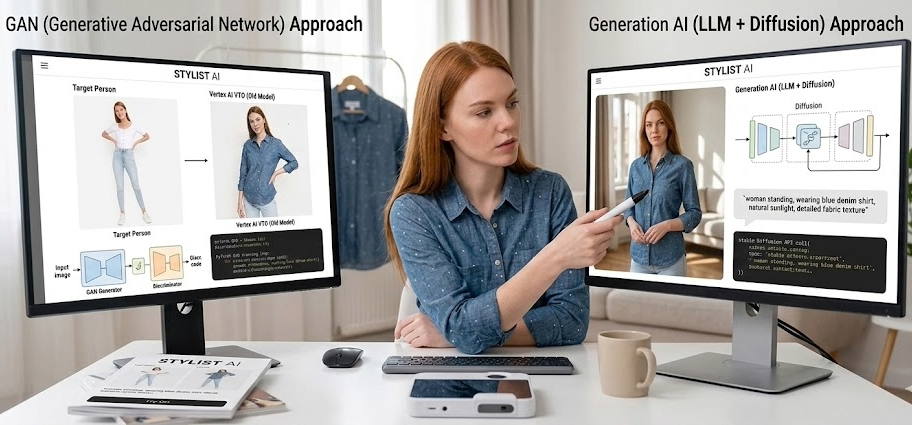
Google proved that generative AI can do virtual try-on. Could the same approach replace our entire GAN pipeline? This is the story of migrating from PASTA-GAN++ to Gemini and Vertex AI — simplifying a multi-stage GPU pipeline into a single API call.

Read more →
Part 2: Nano Banana Virtual Try-On — 16 Test Cases and What They Revealed Series
AIGenerative AIGeminiVirtual Try-OnComputer Vision

Part 2: Nano Banana Virtual Try-On — 16 Test Cases and What They Revealed

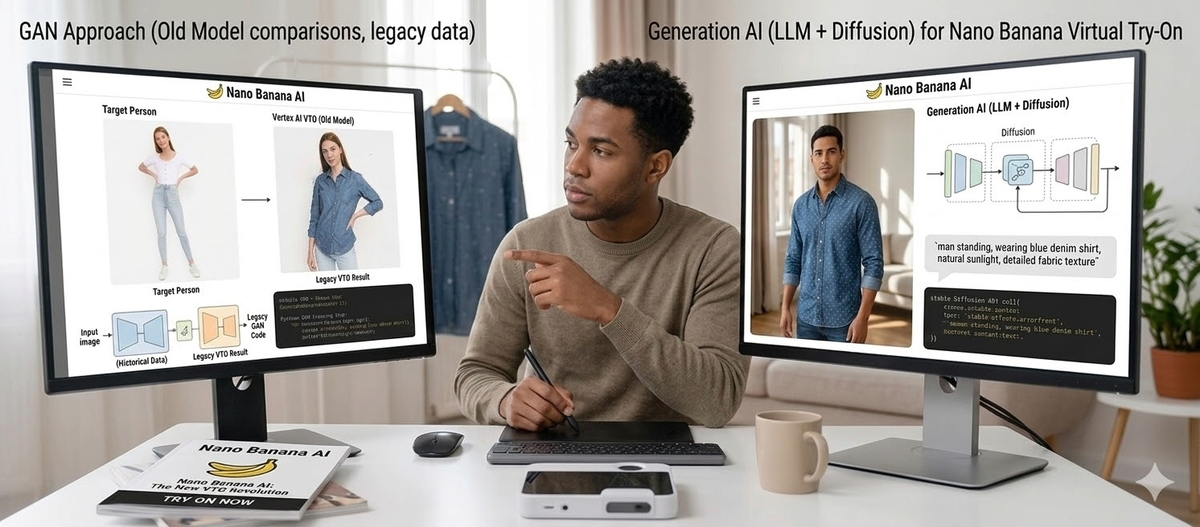
Systematic testing of Gemini's image generation for virtual try-on across three phases: noisy inputs, clean images, and high-resolution action poses. The key finding: resolution matters more than any preprocessing pipeline.

Read more →